The Relationship Between Wholesale Prices and Retail Markups
Understanding Wholesale Pricing Dynamics
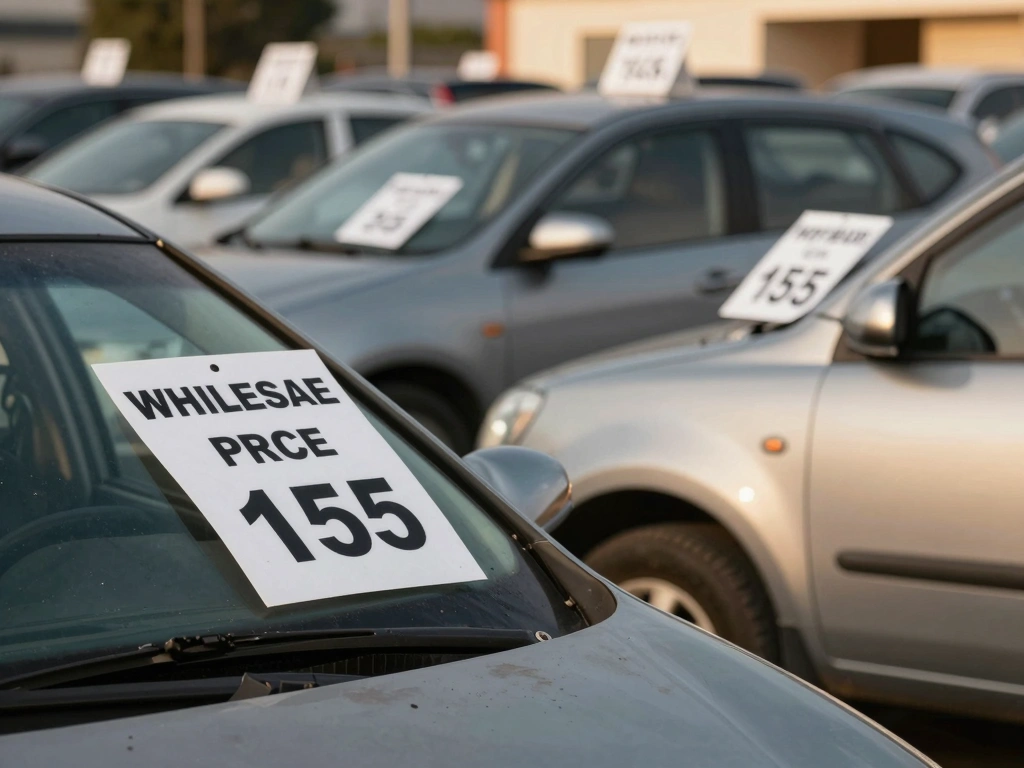
In the used car market, wholesale prices serve as a critical indicator of value for both dealers and consumers. Wholesale prices are the amounts that dealerships pay to acquire used vehicles, typically from auctions, trade-ins, or direct purchases. These prices can fluctuate significantly based on various factors including vehicle condition, mileage, age, and market trends. Understanding these dynamics is essential for comprehending how retail markups are determined.
Factors Influencing Wholesale Prices
Several key factors influence wholesale prices in the used car market:
- Vehicle Condition: Cars that are well-maintained, have no history of significant accidents, and possess a clean title generally command higher wholesale prices.
- Market Demand: High demand for specific makes and models can inflate wholesale prices. For instance, SUVs and pick-up trucks have seen a surge in popularity, thus driving up their wholesale values.
- Seasonality: Certain times of the year, such as tax refund season in spring, often see increased demand for used vehicles, impacting wholesale prices positively.
- Economic Conditions: Broader economic factors, such as unemployment rates and consumer confidence, can either bolster or suppress wholesale prices.
The Impact of Supply and Demand on Markups
The basic economic principle of supply and demand plays a pivotal role in determining how wholesale prices set retail markups. When the supply of used cars is low—perhaps due to fewer trade-ins or a reduction in new car sales—wholesale prices tend to rise. In turn, dealers adjust their retail markups accordingly to reflect these increased costs.
For example, if a dealer acquires a used sedan at a wholesale price of $15,000 due to high demand, they may decide to mark it up to $20,000, allowing for a markup of $5,000 or approximately 33%. Conversely, if wholesale prices drop, perhaps due to a surplus of inventory, dealers may reduce their retail prices to remain competitive.
How Dealers Determine Retail Markups
Cost Structures in the Automotive Retail Industry
The cost structure of automotive dealerships is multifaceted and directly influences retail markups. Dealers must consider not just the wholesale price of the vehicle, but also operational costs, which include:
- Overhead Costs: Rent, utilities, and salaries contribute significantly to fixed costs.
- Reconditioning Expenses: Many used cars require repairs and maintenance before they are ready for sale, which adds to the overall cost.
- Marketing and Sales: Advertising costs to attract customers also factor into the pricing strategy.
After accounting for these costs, dealers set retail prices that cover expenses while also providing a profit margin, which can vary widely based on local market conditions.
Competitive Pricing Strategies Among Dealers
Dealers often engage in competitive pricing strategies to attract buyers. In markets with many dealerships, such as urban areas, price competition can be fierce. Dealers may mark up prices slightly above wholesale to maintain profitability while still offering competitive rates to consumers.
For instance, if a dealer purchases a vehicle for $15,000, they might initially consider a markup to $20,000. However, if a nearby dealer lists the same model at $18,000, they may adjust their price to $17,500 to entice buyers, effectively lowering their markup to $2,500.
The Role of Market Trends in Pricing Decisions
Market trends play a crucial role in determining retail markups. Trends can arise from shifts in consumer preferences, technological advancements, and economic conditions. For example, the increasing popularity of electric vehicles (EVs) has led to higher wholesale prices for these models. As a result, dealers may reflect this trend in their retail pricing.
A recent example includes Tesla’s used models, which have seen wholesale prices climb significantly due to high demand. Dealers selling used Teslas may mark them up substantially compared to traditional gasoline-powered vehicles, capitalizing on this market trend.
Regional Variations in Wholesale and Retail Pricing
Geographic Influences on Used Car Values
Used car values often vary by region, influenced by local demand and supply dynamics. For instance, in states with harsh winters, four-wheel-drive vehicles and SUVs tend to hold higher values, affecting wholesale prices. Conversely, compact cars may see lower values in those same regions due to decreased demand.
In a bustling city like San Francisco, where public transport options are robust, small and fuel-efficient cars might dominate the used car market, leading to inflated prices for these models while larger vehicles may lag behind.
Local Economic Conditions and Their Effects
Economic conditions in a given area can also impact wholesale and retail pricing. Regions experiencing economic growth may see higher disposable income levels, leading to increased demand for vehicles and subsequently higher wholesale prices.
For example, in cities with booming tech industries like Austin, Texas, there has been a marked increase in the demand for used luxury vehicles, which has led to rising wholesale prices. Dealers in the area have adjusted their retail markups to reflect these elevated wholesale costs, resulting in higher prices for consumers.
Case Studies of Regional Pricing Discrepancies
To illustrate the impact of regional pricing discrepancies, consider two markets: a rural area in the Midwest and an urban center like New York City. In the Midwest, the wholesale price for a reliable used pickup truck might be around $20,000, with retail markups set at approximately 20%, bringing the retail price to $24,000.
Conversely, in New York City, the same truck could see a wholesale price of $25,000 due to higher demand for such vehicles in urban environments. Dealers might set a retail markup of 30%, bringing the retail price to $32,500. This example highlights how geographical differences can create stark contrasts in pricing strategies.
The Role of Auctions in Setting Wholesale Prices
Types of Auctions and Their Influence on Prices
Auction houses play a significant role in the wholesale used car market. Different types of auctions, including public auctions, dealer-only auctions, and online auctions, can influence wholesale prices in various ways. Dealer-only auctions, such as Manheim and ADESA, are popular among dealerships for acquiring inventory at competitive prices.
For instance, if a dealer purchases a vehicle at a dealer-only auction for $15,000, this price will set the benchmark for their retail markup. In contrast, public auctions may attract more casual sellers, potentially leading to lower wholesale prices due to the less competitive environment.
How Auction Outcomes Affect Retail Pricing Strategies
The outcomes of auctions can have direct implications on retail pricing strategies. If a dealer attends an auction and notices that a particular model is fetching a high price—say $20,000—this might signal strong demand, prompting the dealer to mark up their retail price accordingly. Conversely, if prices are low, dealers might be more inclined to keep retail prices competitive to avoid excess inventory.
For example, if a dealer participates in an auction where the wholesale price of a popular sedan drops to $14,000 due to oversupply, they may opt to set a retail price closer to $18,000 to ensure quick sales, rather than maintaining a higher price that could deter potential buyers.
Trends in Auction Participation and Retail Adjustments
As the used car market evolves, the participation in auctions has changed. With the rise of online platforms, many dealers are increasingly sourcing their inventory through digital auctions, which can lead to fluctuations in wholesale prices. This shift can also impact retail markups, as dealers who are able to acquire vehicles at lower costs through online auctions may pass those savings onto consumers.
For instance, a dealer who successfully purchases multiple vehicles at a lower-than-expected price during an online auction may decide to adjust their retail prices downward to increase sales volume, potentially leading to a more competitive market environment.
Future Trends in Used Car Pricing and Markups
Technological Innovations and Their Impact on Pricing
Technological advancements are poised to have a profound impact on used car pricing and retail markups. The proliferation of data analytics tools allows dealers to better understand market trends and customer preferences, enabling more dynamic pricing strategies. For example, dealers can now track historical price movements and adjust their retail prices in real-time based on demand fluctuations.
Moreover, online platforms that aggregate pricing information help dealers set more accurate wholesale prices, which can lead to more informed retail pricing decisions. This can result in more competitive pricing for consumers, as dealers no longer rely solely on traditional methods of pricing.
Predictions for Wholesale and Retail Price Movements
Looking ahead, experts predict that wholesale prices will continue to be influenced by ongoing supply chain challenges and shifts in consumer behavior. For instance, if new vehicle production remains constrained, it may drive up demand for used cars, consequently raising wholesale prices and, in turn, retail markups.
Additionally, the rise of electric vehicles may further complicate pricing dynamics. As more consumers shift towards EVs, the demand for traditional gasoline vehicles might decrease, affecting wholesale prices and marking up strategies across the board.
The Influence of Economic Factors on Future Markups
Economic factors such as inflation, interest rates, and employment rates will play a crucial role in shaping future retail markups. If inflation continues to rise, operational costs for dealerships may increase, leading to higher retail prices. On the other hand, if the economy experiences a downturn, dealers may be forced to lower retail prices to stimulate sales, tightening their profit margins.
For example, in a high-interest rate environment, consumers may be less willing to finance higher-priced vehicles, prompting dealers to reevaluate their retail markups to remain competitive in a constrained market.